Don't Buy the Panasonic Lumix Tz300 Until You Read This Full Analysis
In the rapidly evolving world of digital photography, the travel zoom category remains one of the most contested segments. For years, the Panasonic Lumix TZ series (known as the ZS series in North America) has set the benchmark for what a pocketable camera can achieve. The Panasonic Lumix Tz300 represents a significant iteration in this lineage, promising a blend of extreme zoom capabilities, advanced 4K video features, and a compact form factor that appeals to globetrotters and casual weekend explorers alike. However, as smartphones continue to erode the market share of traditional point-and-shoots, the question remains: is a dedicated travel zoom still worth the investment? This analysis dives deep into the technical specifications, real-world performance, and ergonomic considerations of the Tz300 to help you determine if it belongs in your gear bag or if you should look elsewhere.
The Evolution of the Travel Zoom
The concept of the "travel zoom" is built on a paradox: users want a lens that can reach the moon but a body that fits into a jacket pocket. Panasonic has historically navigated this challenge by utilizing 1/2.3-inch sensors, which are small enough to allow for massive zoom ratios without requiring a lens the size of a telescope. The Tz300 continues this tradition, featuring a 30x optical zoom lens that covers an equivalent focal range of 24mm to 720mm. While these numbers are impressive on paper, they come with inherent trade-offs in light-gathering ability and image noise management. In this analysis, we look beyond the marketing jargon to see how the camera handles the pressures of real-world travel photography, from dimly lit museums to sun-drenched landscapes.
Detailed Product Analysis
Sensor Performance and Image Quality
At the heart of the Tz300 is a 20.3-megapixel High Sensitivity MOS sensor. For a sensor of this size, the pixel density is quite high, which allows for sharp details in bright conditions but presents challenges when the sun goes down. In daylight, the Tz300 produces images with the signature Lumix "pop"—vibrant colors, accurate skin tones, and excellent contrast. The Venus Engine image processor does a commendable job of handling JPEG output, applying just enough sharpening to make the images look crisp without introducing heavy artifacts.
However, the physical limitations of the 1/2.3-inch sensor become apparent as the ISO increases. While ISO 80 to 400 produces very clean results, noise begins to creep in at ISO 800. By ISO 1600, fine details such as foliage or fabric textures start to soften due to the camera's internal noise reduction algorithms. Despite this, for the typical travel photographer who primarily shares images on social media or prints at 4x6 or 5x7 inches, the image quality remains vastly superior to most standard smartphones, particularly because of the optical reach.
The Leica DC Vario-Elmar Lens
The 30x optical zoom is undoubtedly the star of the show. Developed in partnership with Leica, the lens features an aperture range of f/3.3 to f/6.4. At the wide end (24mm), it is wide enough to capture expansive architecture or group shots in tight spaces. At the telephoto end (720mm), it allows birdwatchers and sports fans to get close to the action from a distance. The lens construction includes five aspherical lenses and ten aspherical surfaces, which helps minimize chromatic aberration—something that often plagues high-zoom compacts. The lens also features a 5-axis HYBRID O.I.S.+ (Optical Image Stabilizer) system, which is critical when shooting at 720mm, where even the slightest hand tremor can blur the image.
4K Video and Photo Capabilities
Panasonic has long been a leader in 4K technology, and the Tz300 benefits from this expertise. It records 4K video at 30p, providing four times the resolution of Full HD. For travel vloggers, the "4K Photo" mode is a game-changer. This feature allows you to extract an 8-megapixel still image from a 4K video sequence, essentially giving you a 30fps burst mode. This is particularly useful for capturing the exact moment a street performer jumps or a wave crashes against the shore. Additionally, the "Post Focus" feature allows you to choose the focus point of a photo after you have taken it by shifting the focus during a 4K burst—a helpful tool for macro photography where the depth of field is exceptionally thin.
Ergonomics and Handling
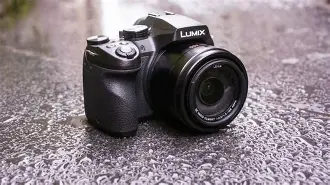
Despite its long lens, the Tz300 remains remarkably slim. It features a high-resolution Live View Finder (LVF) with 1,166k-dot resolution, which is indispensable when shooting in bright sunlight where the 3.0-inch rear LCD might be washed out. Speaking of the LCD, it is a touch-sensitive screen that supports "Touch Pad AF," allowing you to move the focus point with your thumb while keeping your eye to the viewfinder. The control ring around the lens barrel provides a tactile way to adjust settings like zoom, aperture, or shutter speed, giving the camera a more professional feel than a standard point-and-shoot.
Pros and Cons of the Panasonic Lumix Tz300
- Incredible Focal Range: The 24-720mm equivalent zoom makes it one of the most versatile tools for travel, capable of capturing everything from wide-angle landscapes to distant wildlife.
- Advanced 4K Features: 4K Video, 4K Photo, and Post Focus provide creative flexibility that many competitors in this price bracket lack.
- Stabilization: The 5-axis Hybrid O.I.S. is highly effective, allowing for usable handheld shots even at significant zoom levels.
- Physical Viewing Options: Having both a high-quality electronic viewfinder and a responsive touchscreen offers the best of both worlds for framing.
- Portability: It fits into a pocket or small pouch, making it easy to carry all day without the neck strain associated with larger cameras.
- Small Sensor Constraints: Low-light performance is limited by the 1/2.3-inch sensor size, leading to noise in indoor or night shots.
- Diminishing Aperture: As you zoom in, the maximum aperture drops to f/6.4, requiring very bright light or higher ISOs to maintain fast shutter speeds.
- No Weather Sealing: While robustly built, the camera is not weather-sealed, so users must be cautious in dusty or rainy environments.
- Battery Life: While decent for a compact, frequent use of 4K features and the EVF will drain the battery relatively quickly, necessitating a spare for full-day excursions.
Technical Comparison
To understand where the Tz300 fits in the current market, it is helpful to compare it against its siblings and primary competitors. The following table highlights the key differences between a standard travel zoom and its high-end counterparts.
Looking for the best Cameras & Photography deals on Amazon?
View Offers →| Feature | Lumix Tz300 | Standard Smartphone | 1-inch Sensor Compact |
|---|---|---|---|
| Optical Zoom | 30x (24-720mm) | Typically 1x - 5x | Typically 10x - 15x |
| Sensor Size | 1/2.3-inch MOS | Varies (usually small) | 1.0-inch High Sensitivity |
| Video Resolution | 4K (30p) | 4K (30/60p) | 4K (30/60p) |
| Viewfinder | Yes (1,166k-dot) | No (Screen only) | Yes (Often higher res) |
| Manual Controls | Full Manual + Control Ring | Limited/App-based | Full Manual + Dual Dials |
| ISO Range | 80 - 6400 | Varies (often noisy) | 125 - 12800 (Clean) |
Buying Guide: Is the Tz300 Right for You?
Choosing a camera is rarely about finding the "best" specs on paper; it is about finding the tool that matches your specific shooting style. Before purchasing the Tz300, consider the following real-world use cases to see if they align with your needs.
The Wildlife and Birding Enthusiast
If your primary goal is to capture photos of birds in your backyard or animals on a safari, the 720mm reach of the Tz300 is its strongest selling point. A smartphone simply cannot compete at these distances, and a DSLR with an equivalent lens would cost thousands of dollars and weigh several kilograms. For this user, the Tz300 is an excellent, cost-effective solution, provided the shooting takes place during daylight hours.
The Everyday Family Vacationer
For those who want a better-than-phone experience for graduation ceremonies, school plays, or beach clips, the Tz300 offers great value. The 4K Photo mode is particularly useful for parents who want to ensure they catch the exact micro-second their child crosses the stage or scores a goal. The physical zoom toggle also allows for much smoother zooming during video recording compared to the "pinching" gesture required on a phone screen.
The Low-Light and Night Photographer
If you find yourself frequently taking photos in dark restaurants, poorly lit museums, or cityscapes at night, you should exercise caution. The small sensor of the Tz300 struggles in these environments. While the image stabilization helps by allowing longer shutter speeds, it can't compensate for a moving subject in the dark. If night photography is your priority, you might want to sacrifice zoom for a camera with a larger 1-inch sensor, such as those in the TZ100 or TZ200 series.
The Hiker and Backpacker
Weight is everything when you are carrying your gear on your back for ten miles. The Tz300 provides a massive focal range in a package that weighs roughly 320 grams. This allows you to capture a wide-angle vista from the summit and a marmot on a distant ridge with the same device. The USB charging capability is another plus, as it allows you to top up the battery using a portable power bank while on the trail.
Real-World Performance Considerations
Autofocus Speed and Accuracy
Panasonic uses "Depth From Defocus" (DFD) technology to achieve focus. In practice, this means the camera can lock onto a subject incredibly quickly in good lighting. It is noticeably faster than many other point-and-shoots, which often hunt for focus at the long end of the zoom. In lower light, the AF slows down slightly, but the AF assist lamp helps mitigate this for close-range subjects. Face and eye detection are also present and work reliably for portraiture.
Menu System and Customization
The Lumix menu system is comprehensive—perhaps even a bit overwhelming for beginners. However, it offers a level of customization rarely seen in compact cameras. There are several "Fn" (Function) buttons that can be mapped to your most-used settings, such as ISO, White Balance, or the Drive Mode. The Q.Menu (Quick Menu) provides a shortcut to essential settings, allowing you to make adjustments without diving into the main menu structure. This makes the Tz300 a camera that can "grow" with you as you become more comfortable with manual photography.
Discover deals on Cameras & Photography — updated daily.
See Deals →Connectivity and Social Sharing
In the age of instant gratification, the ability to share photos quickly is vital. The Tz300 features built-in Wi-Fi, allowing you to connect the camera to your smartphone via the Panasonic Image App. From there, you can remote-control the camera (including zooming and firing the shutter) or transfer images directly to your phone for posting to Instagram or Facebook. The setup process is relatively straightforward, though like most camera-to-phone apps, it can occasionally experience connection drops in areas with high signal interference.
Understanding the Limitations
It is important to manage expectations regarding the "Leica" branding. While the lens is designed under Leica's strict quality standards, it is still a small-aperture lens matched with a small-format sensor. Beginners often expect the "Leica look" (heavy bokeh or background blur) that they see in professional street photography. However, due to the small sensor, it is difficult to achieve a shallow depth of field with the Tz300 unless you are shooting very close to your subject (macro) or zoomed all the way in with a significant distance between the subject and the background.
Another factor to consider is the build quality. While the Tz300 feels solid and well-assembled, the telescopic lens barrel is a moving part that can be susceptible to dust ingress over time. Unlike an interchangeable lens camera, you cannot easily clean the sensor if dust gets inside. Using a small protective pouch and avoiding extending the lens in very sandy or dusty conditions will go a long way in preserving the longevity of the device.
Conclusion
The Panasonic Lumix Tz300 is a masterclass in compromise and engineering. It manages to cram a phenomenal amount of technology into a body that is genuinely portable. For the traveler who values reach above all else, it is a formidable tool that offers creative possibilities a smartphone simply cannot replicate. Its 4K video features and excellent ergonomics make it a joy to use for those who want a more tactile photography experience.
However, the recommendation to buy the Tz300 comes with a "know your needs" disclaimer. If you are a landscape purist who demands the highest dynamic range, or a night owl who shoots almost exclusively in the dark, the small sensor will eventually frustrate you. But for the vast majority of users—families, hikers, and casual travelers—the Tz300 represents one of the most versatile "all-in-one" solutions on the market. It captures the memories that are too far away for your phone and too fleeting for a bulky DSLR, carving out a specialized niche that still feels relevant in today's mobile-first world.